

A pneumatic hammer and drill are used at the end of the drill pipe, rapidly shattering the rock. The shattered rock is continuously removed from the borehole as air is forced through a hole in drill pipe and out of a nozzle on the bottom. This drilling process is very noisy, muddy, and messy.

Borehole yield is determined by aquifer testing, the process of installing a pump and pumping it to find out the maximum that can be extracted. Yields are described in an engineering context as themaximum water available over a specified period of time at a specific location.
A borehole isn’t best understood as just any hole bored into the ground to obtain water or brines. Instead, it’s usually seen as a long, deep well drilled for that purpose — one which may reach several hundred meters deep and require advanced drilling methods to complete.
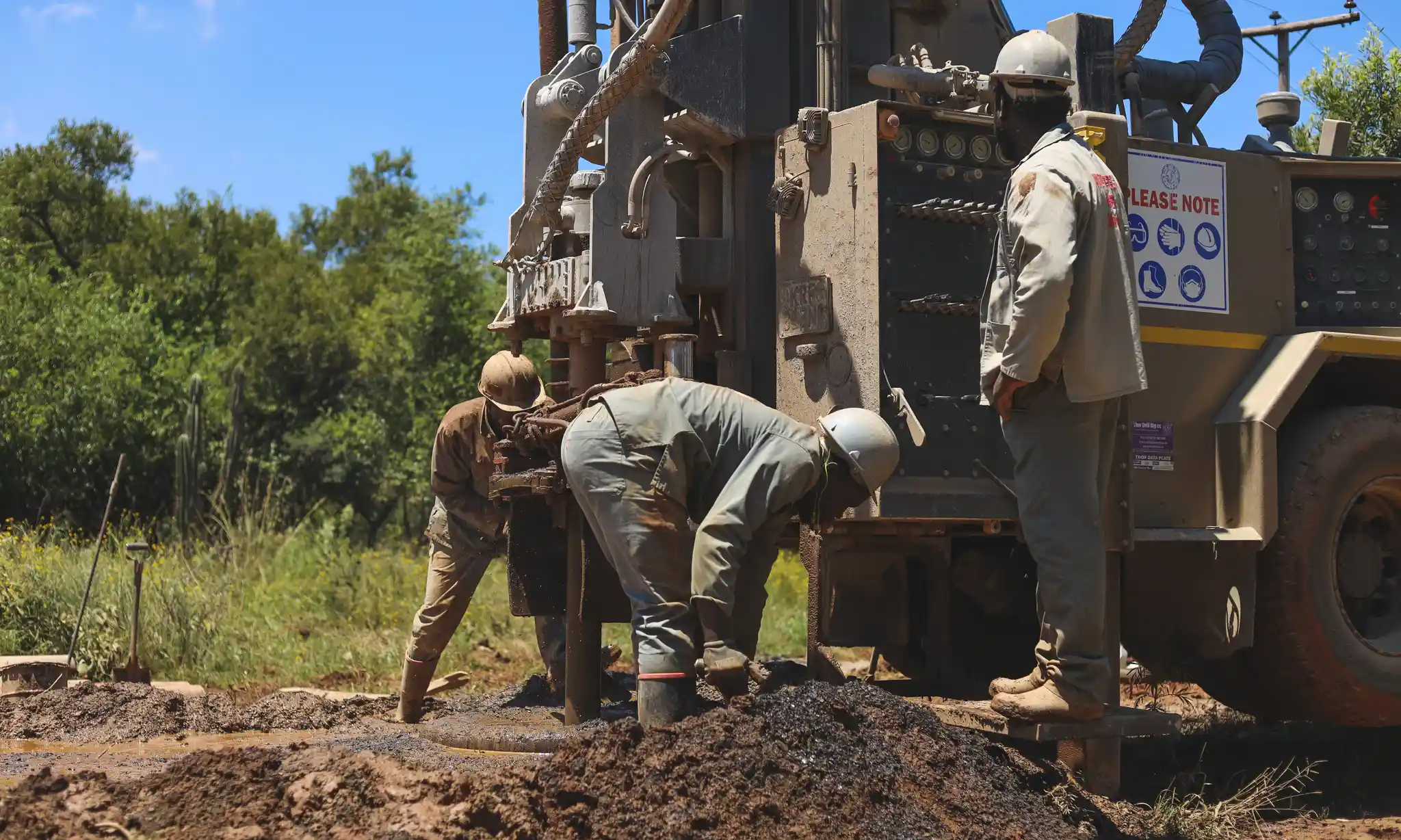
The final stage of borehole drilling requires the pumping and piping of water from the successful borehole. The end use of the water will largely determine the type of pumping and reticulation system that will be installed. With too many variations on the nature and type of pump installations to go into detail here, we will discuss the most appropriate options with you in person.
With over a decade’s drilling experience, we are experts that specialize in borehole drilling services in North West and surrounding areas.
Erf 14, Old Pretoria/Kroondal Road, Waterval East, Rustenburg
hswoodstockdrilling@gmail.com
Harry 067 424 6877 | 082 805 6978